
Bilateral Coordination Cognitive Toy
Project Brief
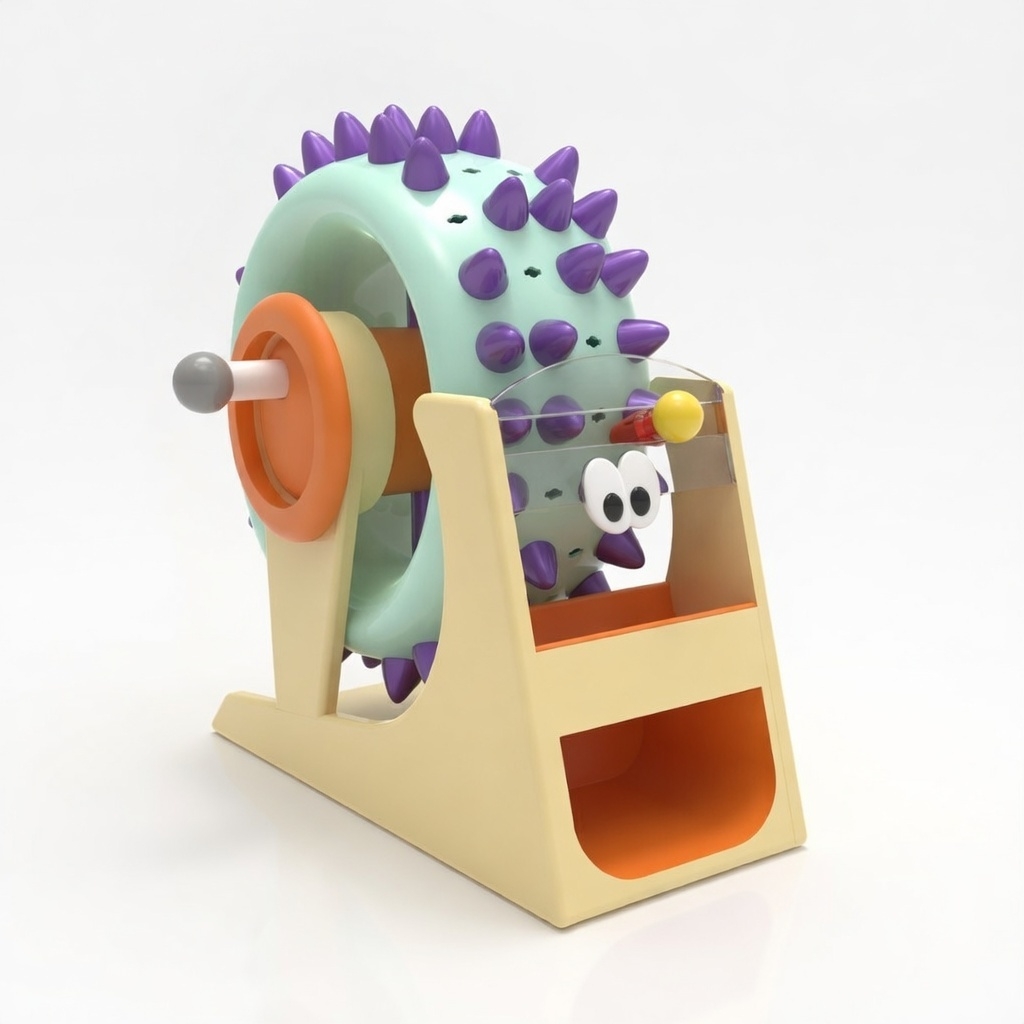
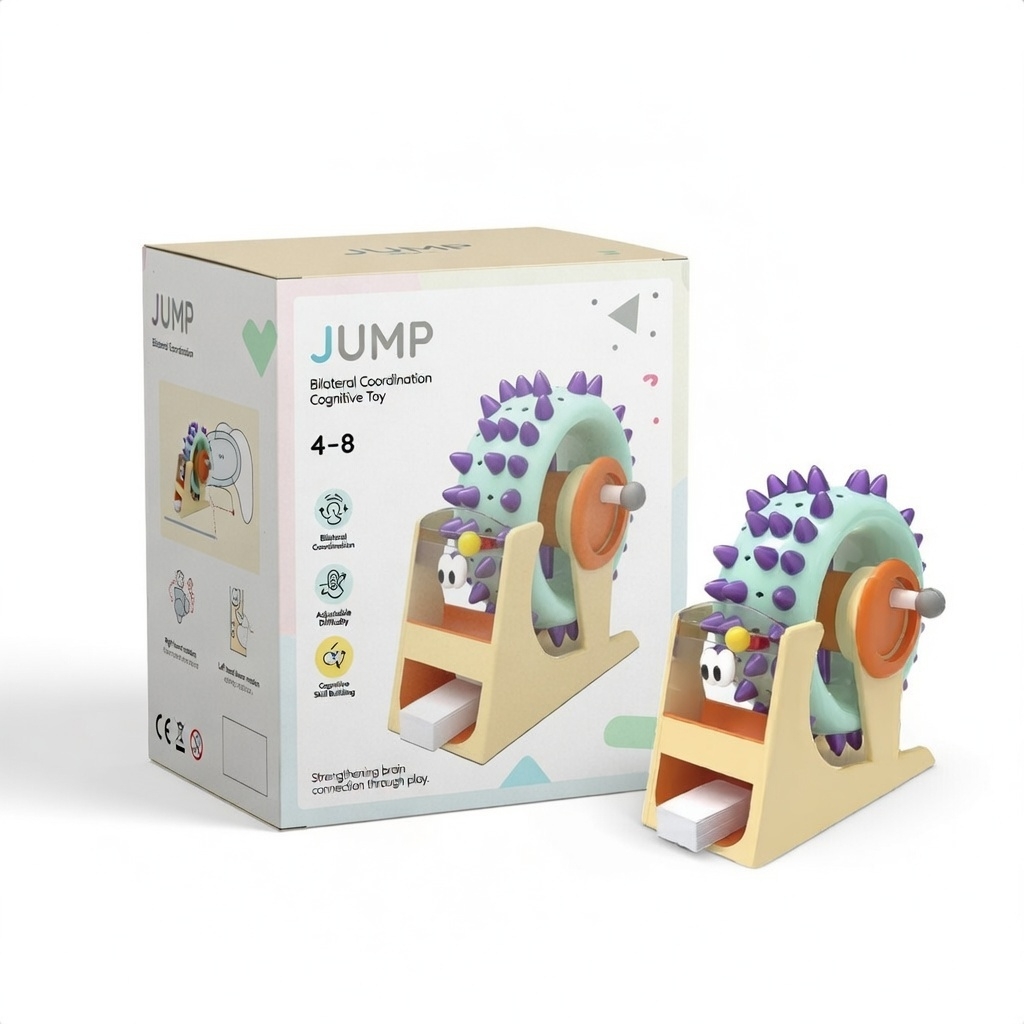
Project Name: JUMP
Innovation Factor: 9/10
Target Market: Export – EU & International
Production Strategy: Plastic Injection Molding
Core Features: Bilateral Coordination / Adjustable Difficulty / Cognitive Skill Building
The Challenge
Modern children are increasingly exposed to passive digital stimuli, reducing opportunities for motor-cognitive engagement. Many existing toys either focus on pure physical activity or isolated cognitive skills — rarely both in a coordinated way.
The Goal
Design a product that strengthens bilateral coordination — particularly stimulating communication between the two hemispheres of the brain (Corpus Callosum activation) — while maintaining a playful, engaging, and scalable difficulty system.
The Innovation
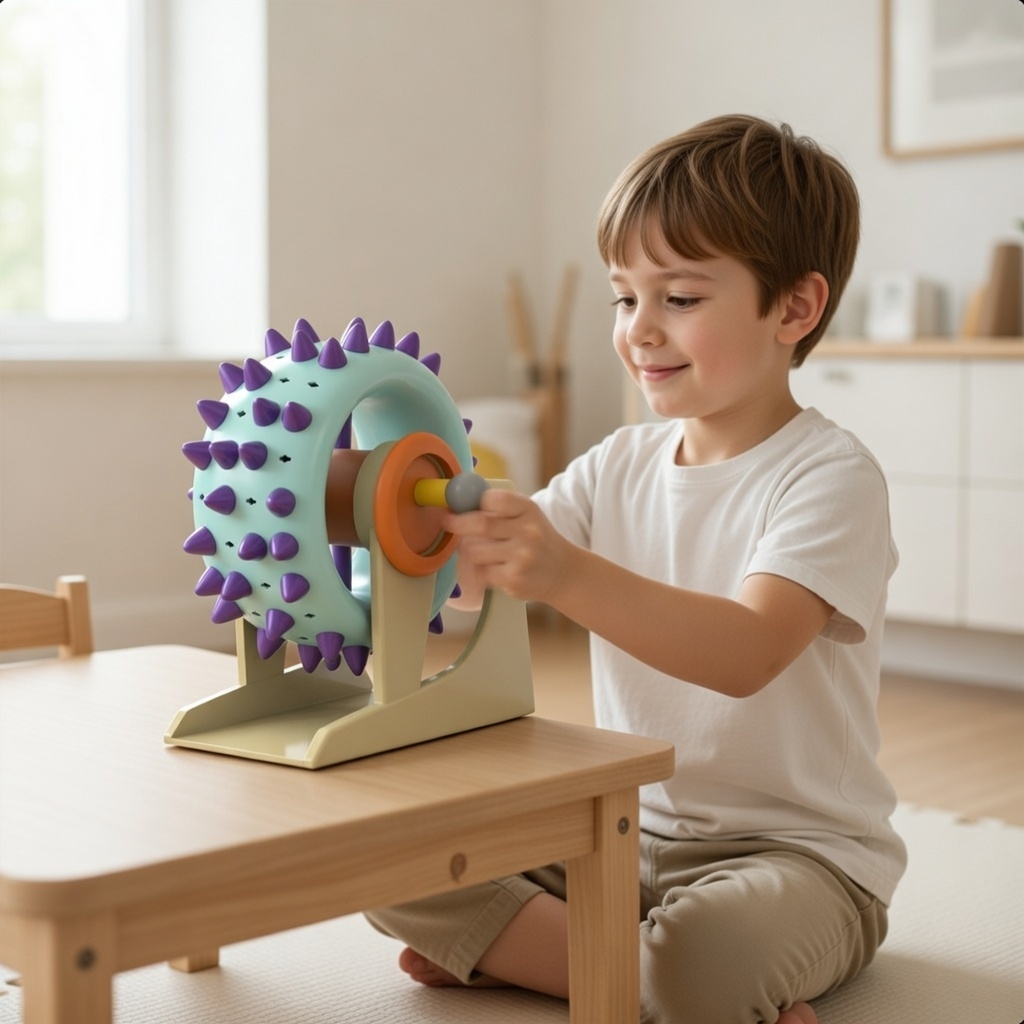
JUMP integrates synchronized two-hand interaction with progressive challenge levels.
The design subtly encourages cross-body coordination, reinforcing neural connections while maintaining a competitive and dynamic play experience.
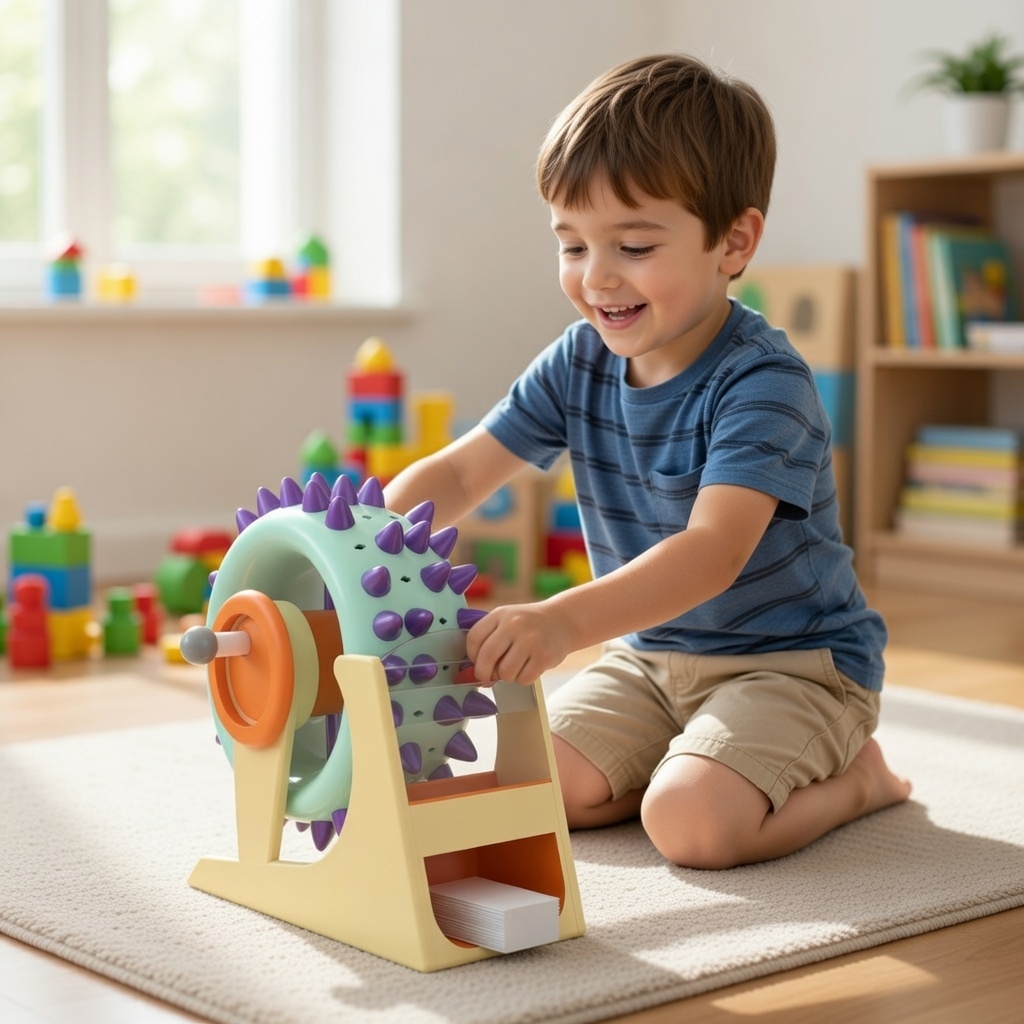
Research
Developmental Background
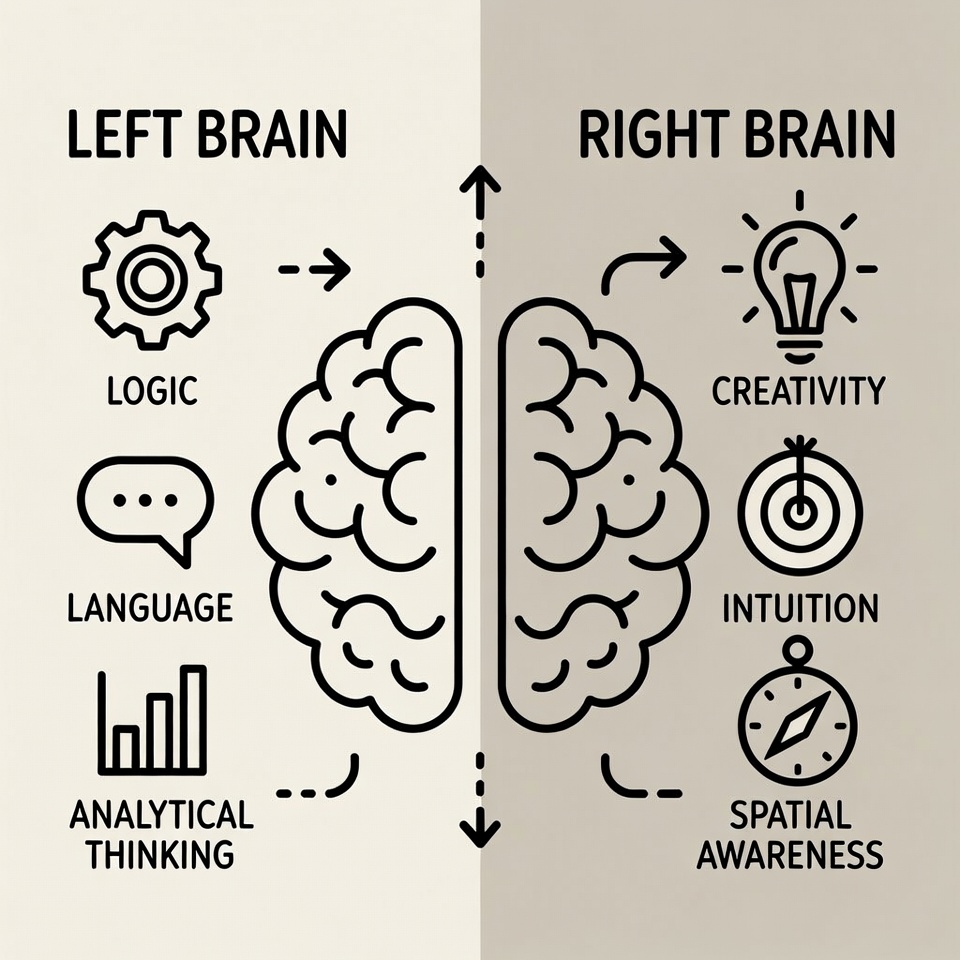
Scientific research shows that bilateral coordination activities enhance communication between the left and right hemispheres of the brain. Strengthening this connection improves:
- Focus and attention span
- Problem-solving ability
- Motor planning
- Reaction time
The corpus callosum plays a critical role in integrating cognitive and motor functions. Toys that require synchronized hand movements stimulate this neural pathway.
Market Analysis
Most coordination toys:
- Focus on gross motor activity only
- Lack adjustable challenge levels
- Do not explicitly address cognitive reinforcement
This revealed an opportunity to design a product combining neuroscience-informed play with scalable engagement.
+Simple infographic illustrating left/right brain coordination:
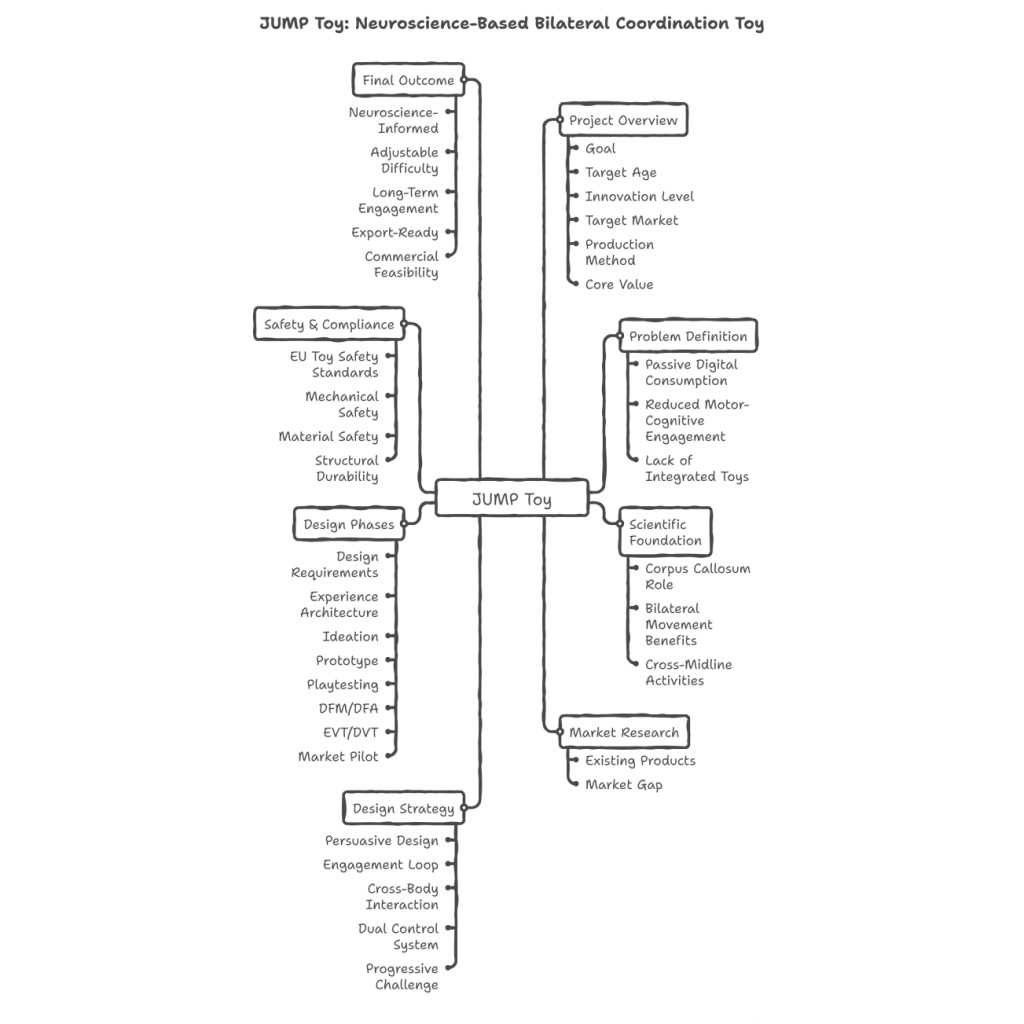
+Early research sketches or mind maps:
Design Process
Concept Development
The primary concept centered around synchronized bilateral interaction. Multiple ideation sketches explored:
- Symmetrical vs. asymmetrical movement
- Reaction-based mechanics
- Modular challenge systems
After concept filtering, a structured dual-control mechanism was selected to ensure simultaneous motor engagement.
Form & Ergonomics
The geometry was developed to:
- Encourage cross-midline hand movement
- Provide comfortable grip zones
- Ensure child-safe edges and proportions
The form language communicates energy and motion, reinforcing the dynamic nature of the game.
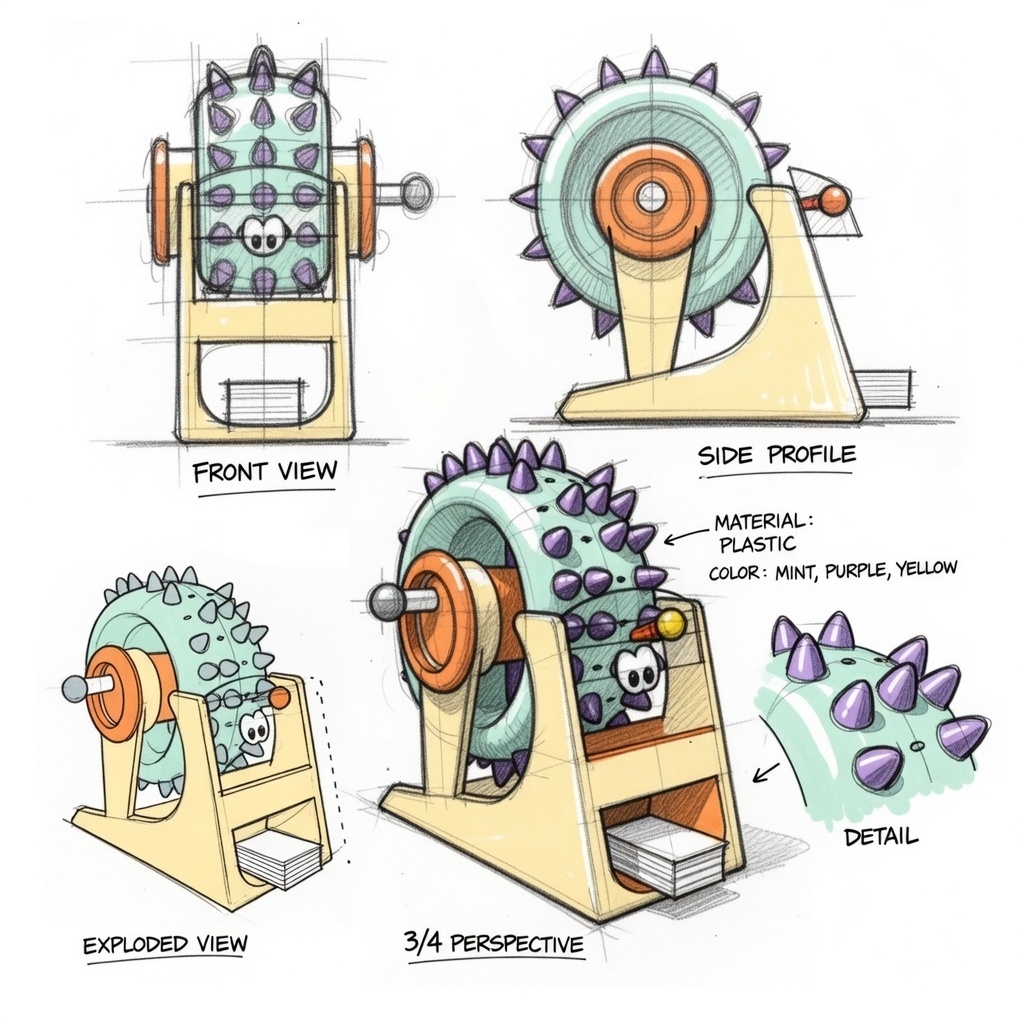
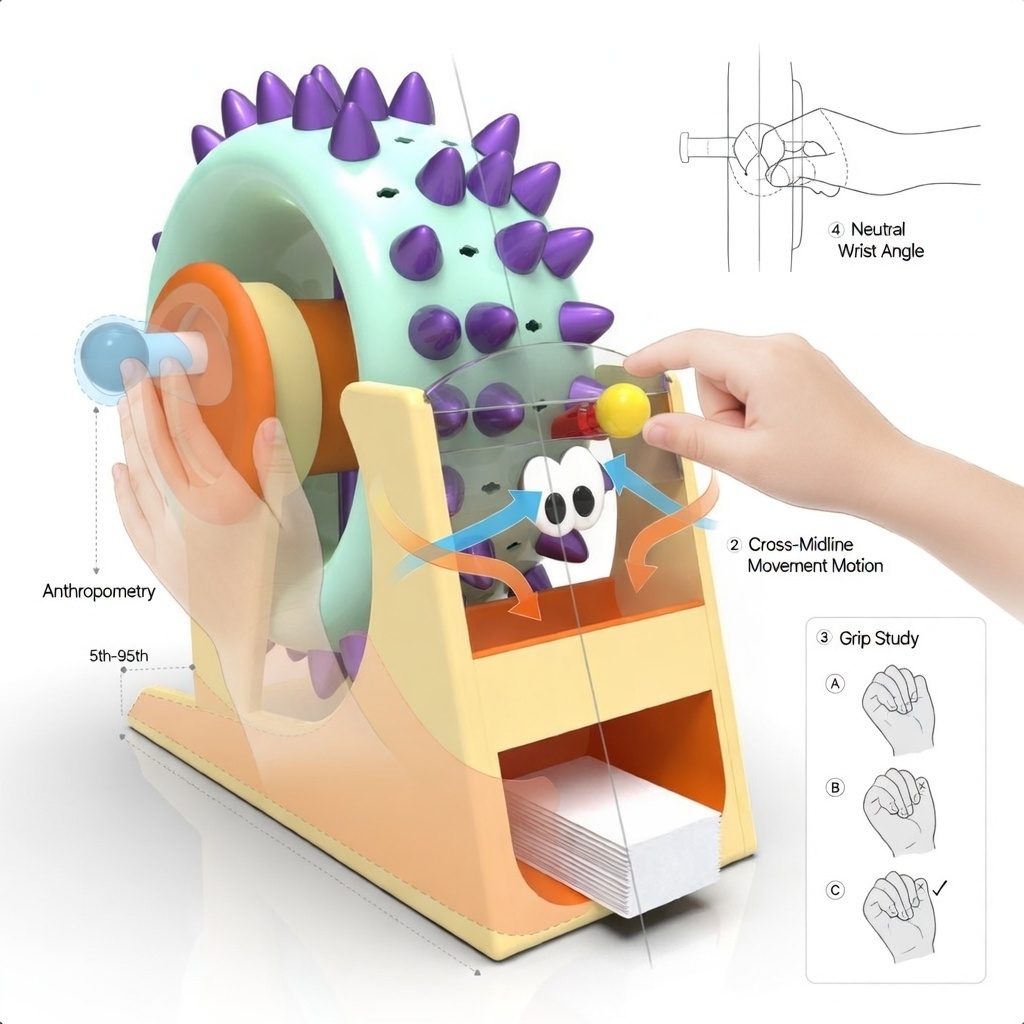
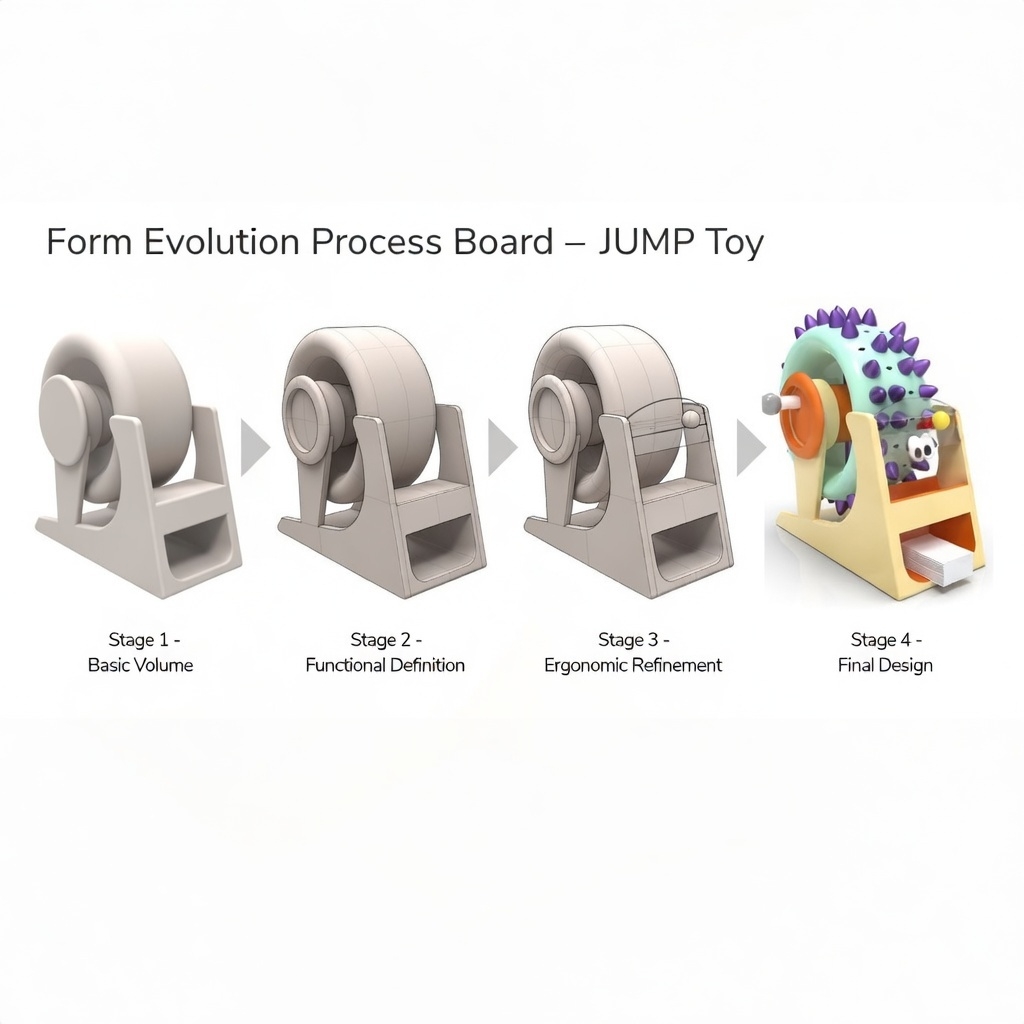
Concept sketches sheet +Ergonomic exploration diagrams + Form evolution process
Development
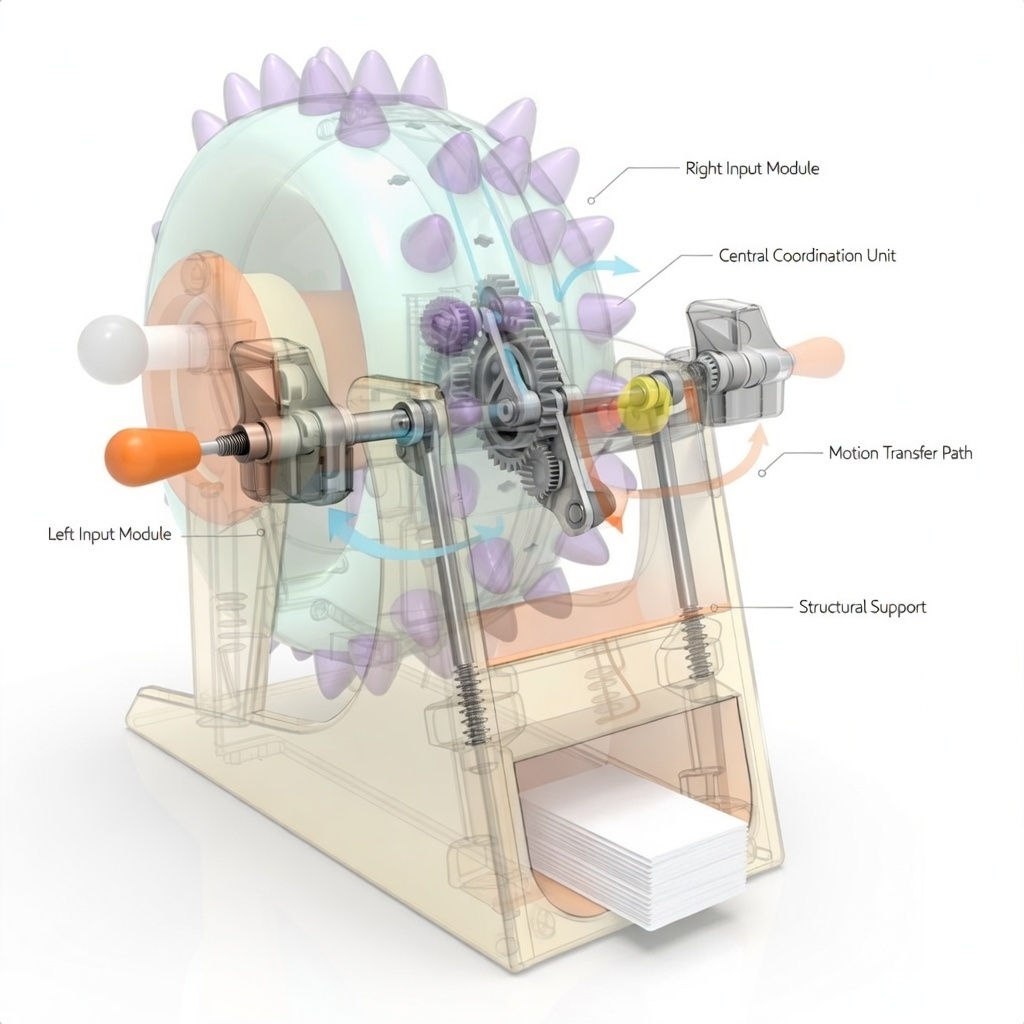
Mechanical Development
The internal mechanism was optimized for:
- Smooth response
- Durability under repetitive impact
- Compatibility with injection molding constraints
Wall thickness, snap-fits, and internal ribs were engineered for cost-effective mass production.
Adjustable Difficulty System
The product incorporates scalable challenge levels by:
- Increasing reaction speed
- Modifying response timing
- Structuring progressive play modes
This ensures long-term engagement rather than short-term novelty.
Manufacturing Strategy
- Material: High-impact ABS / PP (child-safe & EU compliant)
- Process: Injection molding
- Assembly optimized for minimal part count
+Exploded view rendering:
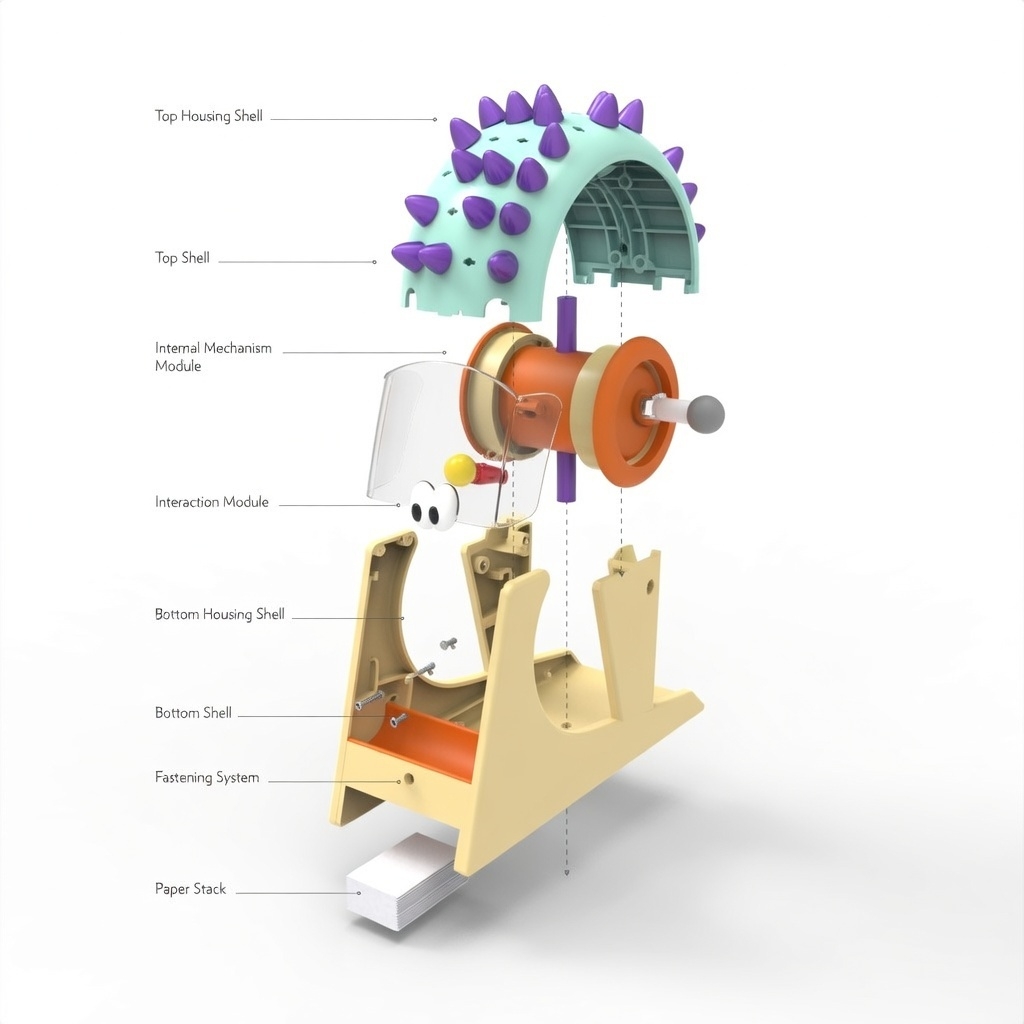
+Internal mechanism visualization:
Final Result
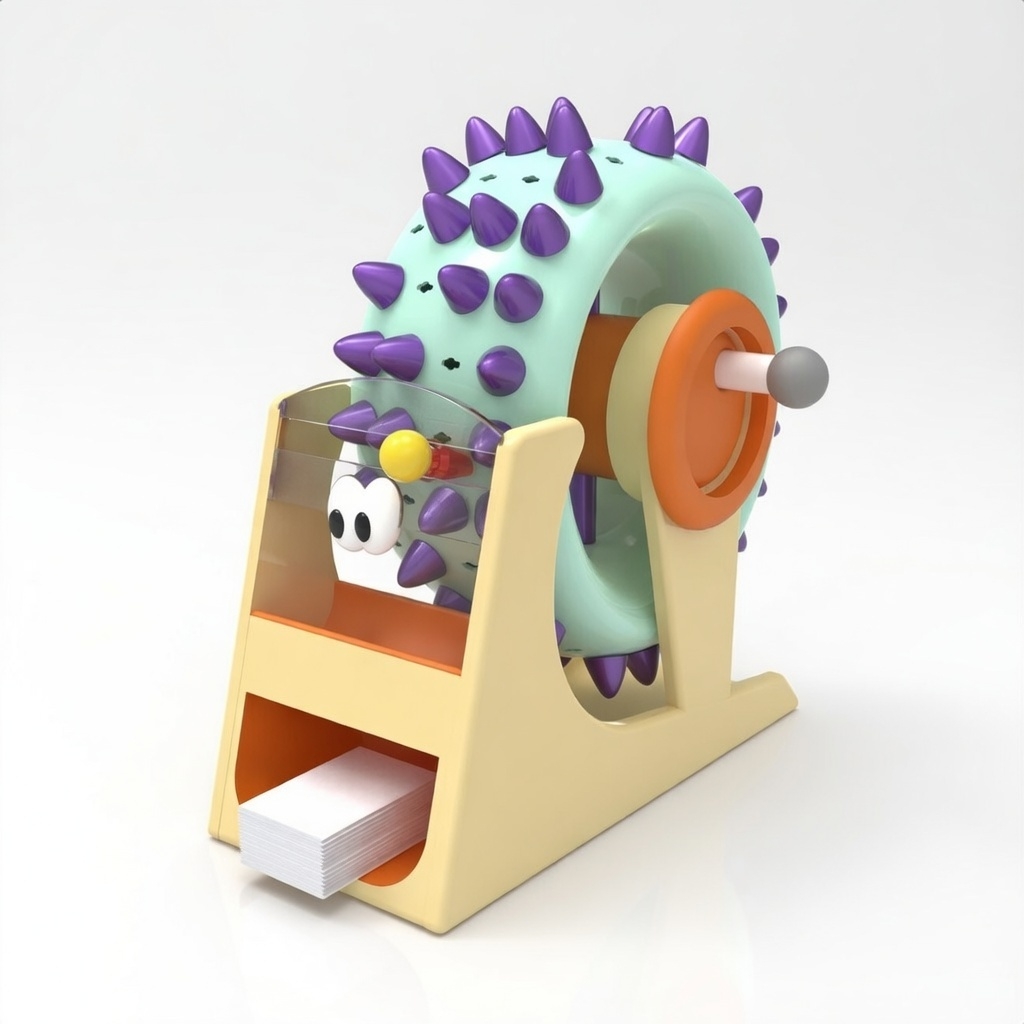
JUMP is a neuroscience-informed coordination toy designed for global markets.
It strengthens bilateral brain communication through engaging two-hand interaction while maintaining commercial feasibility.
Key Outcomes:
- High innovation value (9/10)
- Export-ready production strategy
- Scientifically grounded but market-friendly positioning
- Long-term developmental impact
JUMP transforms play into purposeful neural development — without sacrificing fun.
Toy Story
The child wasn’t distracted.
The game was incomplete.
One day, while observing children at an indoor play space, I noticed something that stayed with me.
Not every child who seems unfocused is distracted.
Sometimes, the brain simply isn’t fully engaged.
Most toys activate one hand.
The other hand just follows.
But real cognitive growth happens when both hands are required to make decisions — at the same time.
That’s when the core question emerged:
What if we designed a toy that forces each hand to perform a different task simultaneously?
The idea sounded simple.
The execution wasn’t.
The real challenge was balance.
How do you design a product that strengthens the connection between both hemispheres of the brain —
while still being exciting?
It had to create tension.
It had to allow failure.
It had to make the child want to try again.
So we went back to fundamentals.
We analyzed the market.
Studied movement patterns and cognitive behavior.
Reviewed scientific references.
Then we prototyped.
Tested.
Refined.
Mechanisms were simplified — without losing the essence of the idea.
And then came the most important question:
Would this idea survive manufacturing?
Components were optimized for injection molding.
Draft angles were reviewed.
Tolerances were carefully defined.
Mechanical risks were reduced.
Because a successful toy is not born in the design studio.
It has to survive the factory floor.
JUMP is the result of that journey.
A play experience engineered to make both hands think.
And for us, every project follows the same path:
A real question.
A real problem.
And a bridge between idea and production.
If you have a toy concept in mind — and want to move forward without risking costly production mistakes —
let’s start a conversation