
Board Game Project
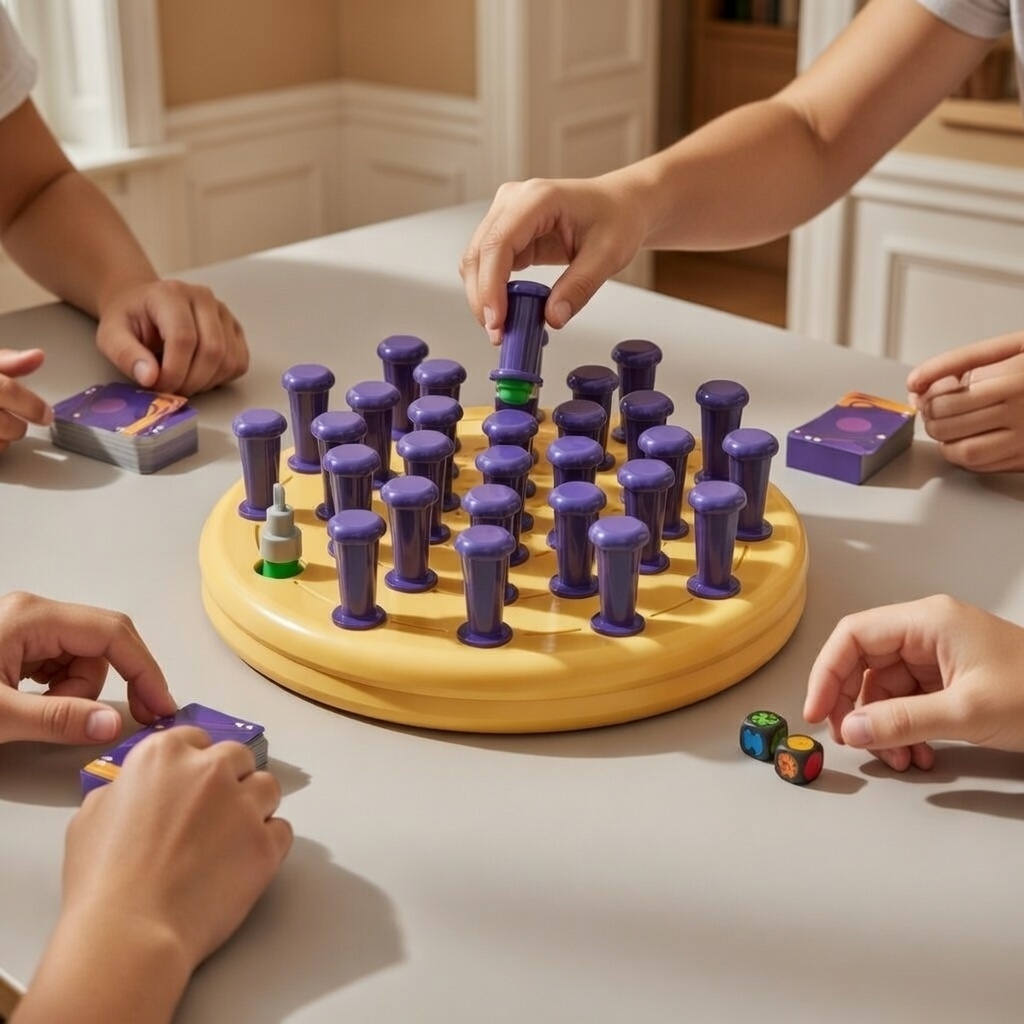
Brief:
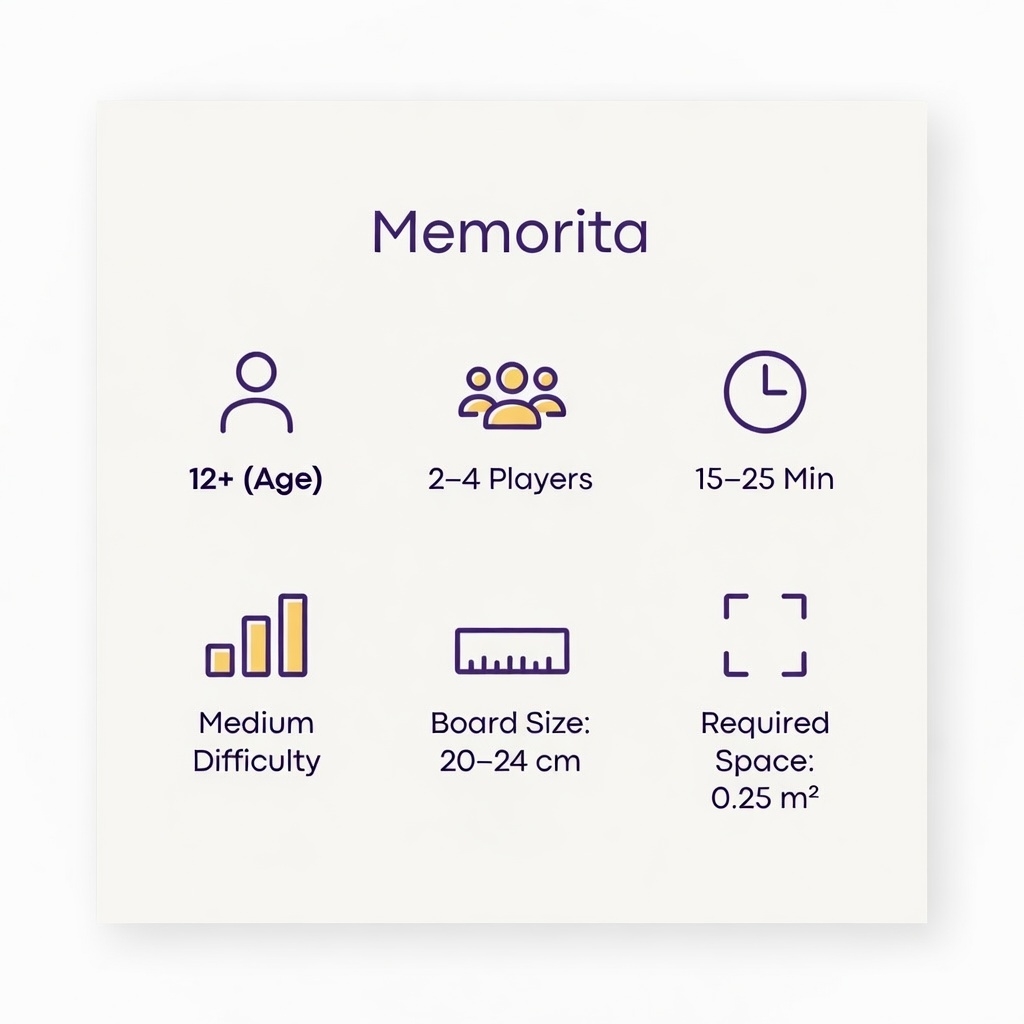
- Age group: 12+ (teenagers & adults)
- Players: 2–4
- Play time: 15–25 minutes
- Difficulty: Medium
- Required space: approx. 0.25 m²
- Board size: 20–24 cm
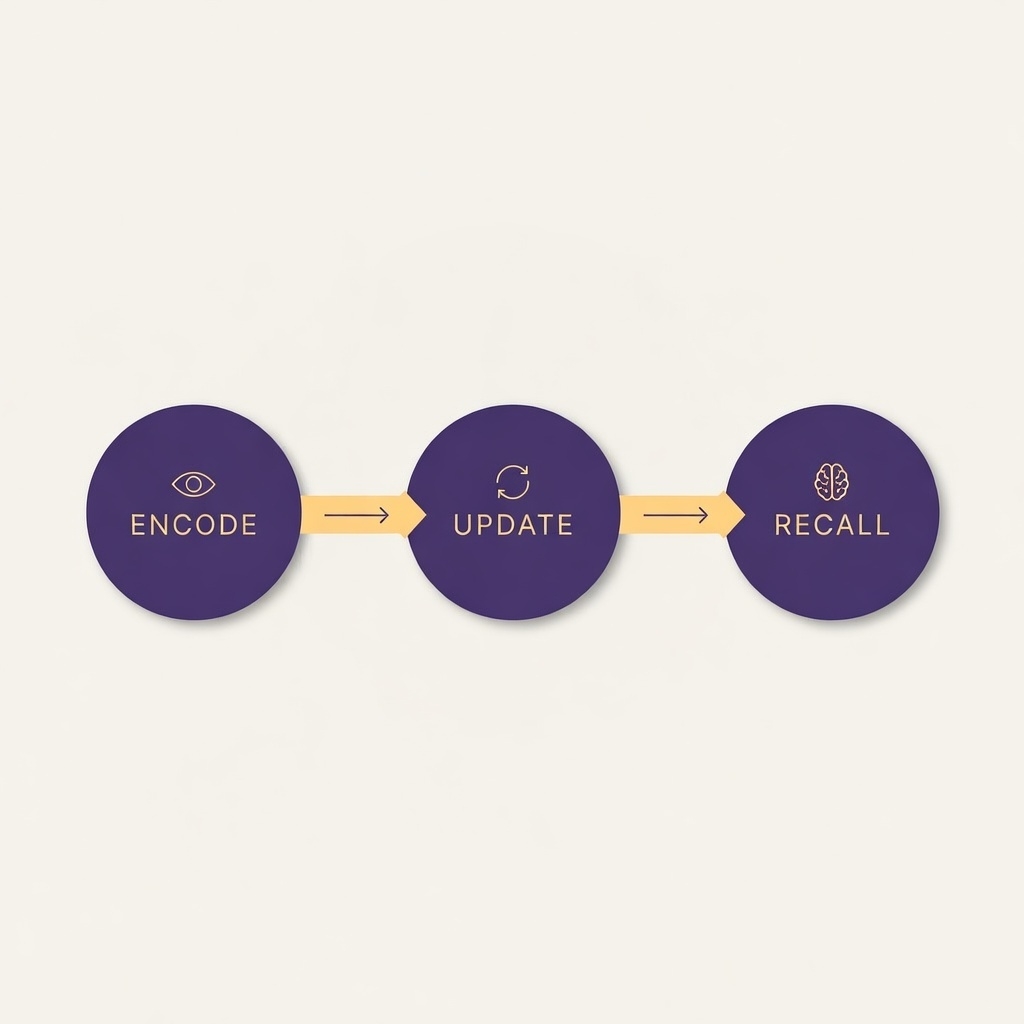
- Core purpose: Training and testing visual-spatial memory through a structured encode → update → recall loop, under controlled spatial disruption (board rotation).
- Theme: Environment & sustainable development (value of natural resources)(Variable).
- Product status: Physical prototype, playtested multiple times.
- Materials (priority): Sustainable materials — wood and recyclable plastics are preferred.
- Innovation factor: 8/10
Research
Memorita started with a focused intent: design a compact, competitive experience that actively trains visual-spatial working memory—the system we use to build and maintain mental maps, track locations, and plan actions.
The gameplay was built around a repeatable cognitive cycle: players first observe and encode the board, then update their mental map as the field changes (rotation + controlled disruption), and finally recall target locations under pressure.
To make the mechanic meaningful, the theme of natural resource value was integrated so that successful recall connects directly to “discovering” and “protecting” resources—supporting conversations around sustainability.
Design
The core mechanic is memory-based location retrieval with an intentional twist: the board does not remain stable. Rotations and card effects create spatial change that forces players to rebuild their internal map instead of relying on simple trial-and-error.
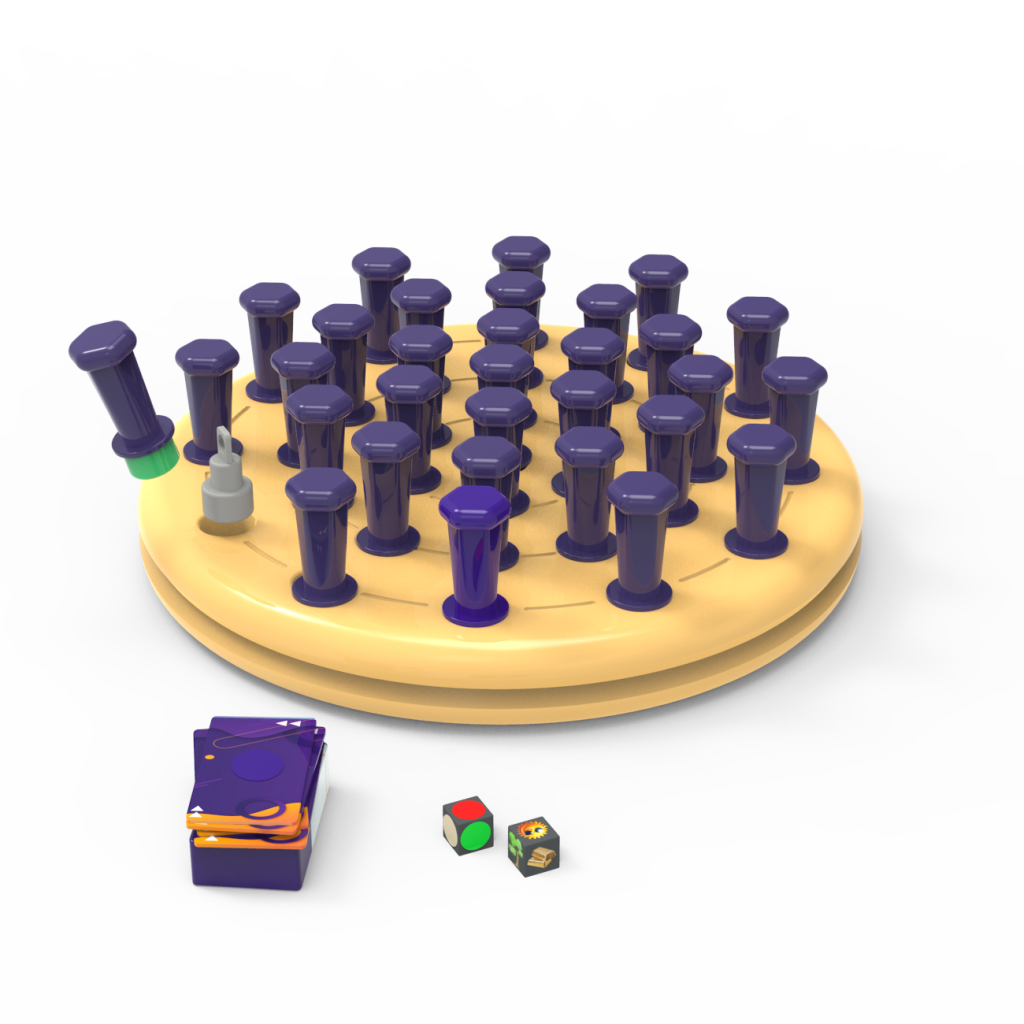
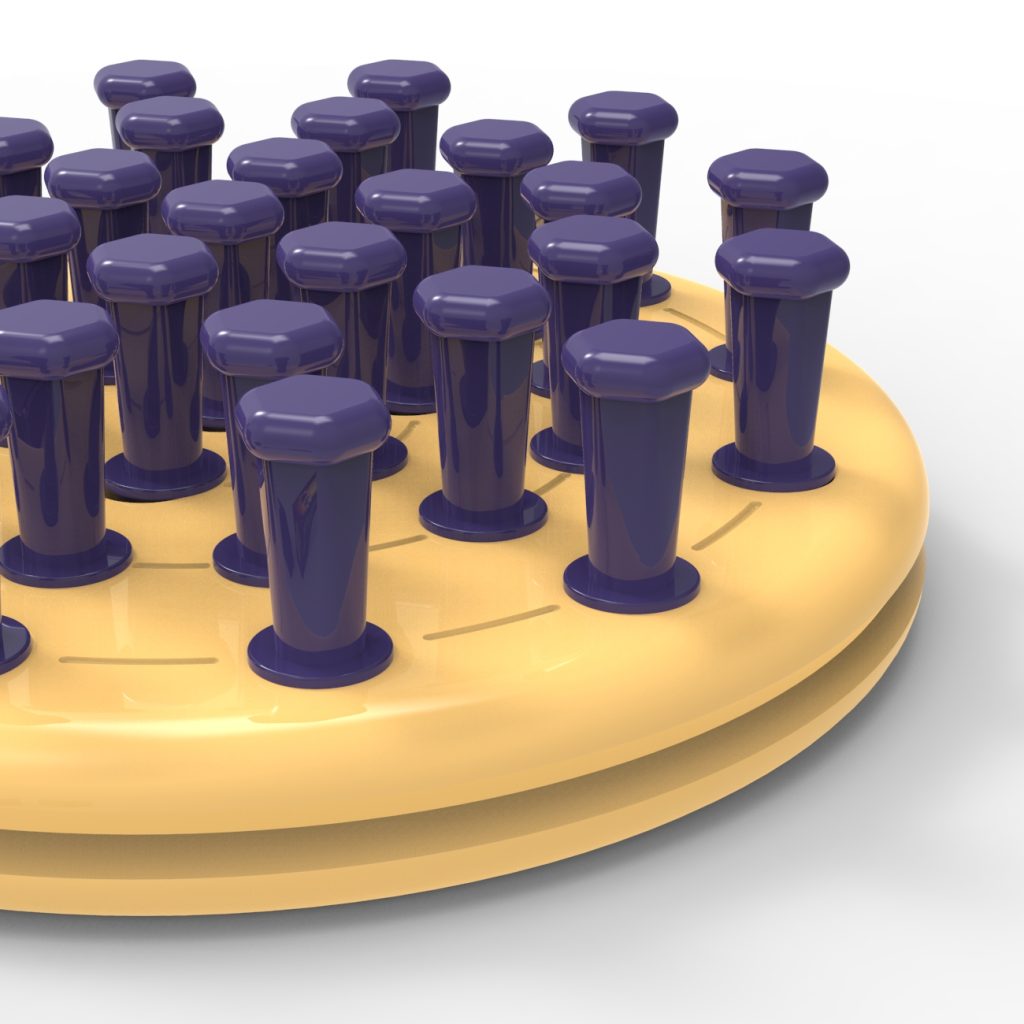
Turn flow (high level):
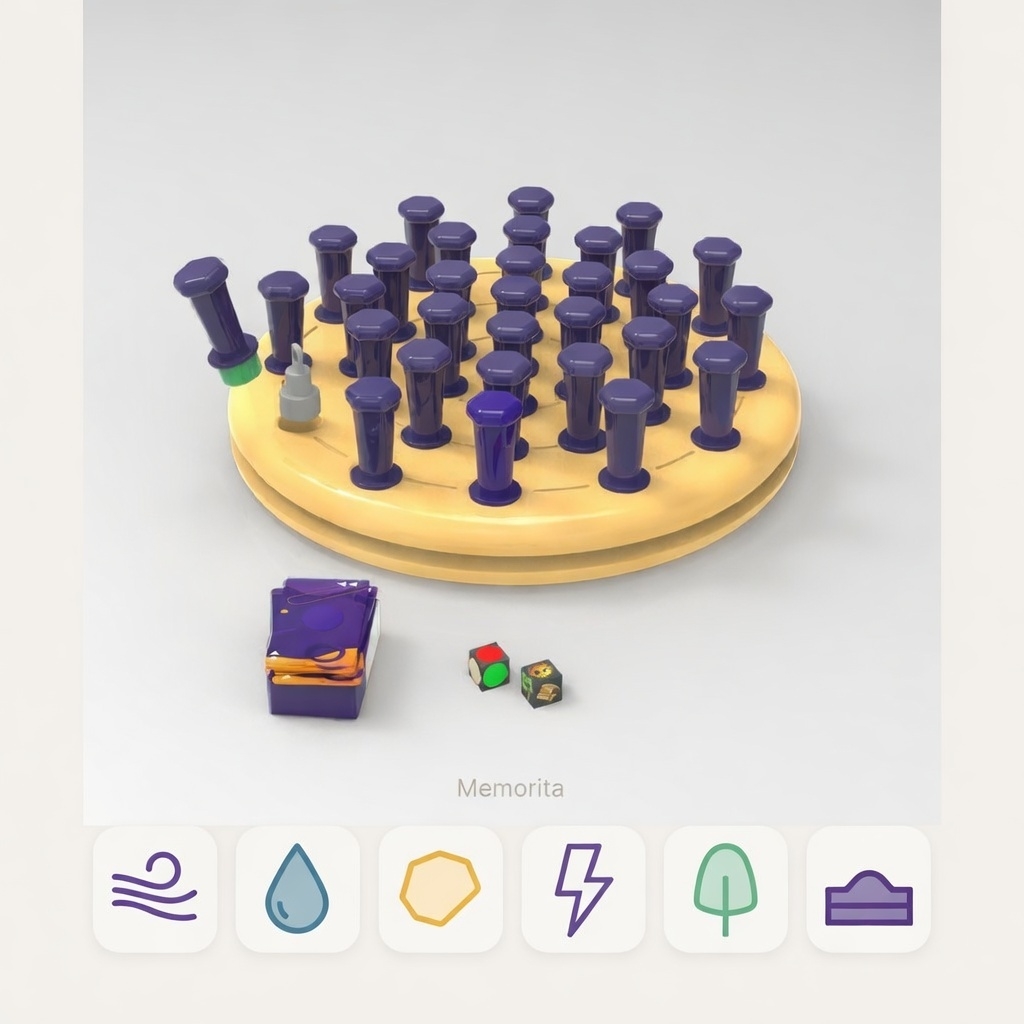
- Roll the Color Die + Resource Die and draw a card.
- Apply the card effect (when possible).
- Choose and lift a colored token:
- If it matches the color die, you claim it.
- If not, you must remember its location.
- Reveal the hidden resource under that position (only you can see it).
- If it doesn’t match, return it and memorize its position.
- Accurate targeting and recall translate into points; resources carry different values.
Key design outcomes:
- In-game assessment: improvement is visible through faster decisions, fewer mistakes, and score momentum—without interrupting the experience.
- Social tension: competition, limited information, and controlled misdirection keep the table dynamic.
- Short, repeatable sessions: the structure supports quick rematches and measurable skill growth.
Development
With a physical prototype already playtested multiple times, the development focus is moving toward production readiness:
- Component optimization: board readability, token ergonomics, clear visual hierarchy to minimize confusion.
- Balance tuning: resource values, card effects, and rotation frequency to keep challenge high but fairness intact.
- Sustainable manufacturing choices:
- Wood for tokens / key elements (FSC-certified if possible).
- Recyclable plastics (where needed for durability or cost).
Low-VOC inks, water-based coatings, and recyclable packaging.
Result
Memorita turns memory training into a fast, competitive, repeatable challenge. Through controlled spatial disruption and hidden-value resources, it creates a skill-forward experience that is measurable, social, and thematically aligned with sustainability.
Designed for 2–4 players and short sessions, it works well for families, classrooms, and board-game spaces—delivering both entertainment value and real cognitive engagement.